93% of Your Exhaustion Is Fake — Your Brain Invented It
You're not tired. You're emotionally bankrupt. And that changes everything about how you recover.
You told 7 people you were "exhausted" this week. You lied to every single one of them.
You drag yourself through Monday morning, coffee in one hand, self-pity in the other, moaning about how tired you are. You collapse on the couch after work, scroll TikTok for 3 hours straight, and tell yourself you're "recharging." You sleep 7 hours, wake up feeling like absolute garbage, and blame your mattress, your boss, your commute, your metabolism — anything except the actual problem.
Here's what you won't admit: you haven't done anything physically demanding in weeks. Probably months. 67% of adults in developed countries fail to meet even the minimum exercise guidelines. The average office worker burns fewer calories at their desk than they would lying in bed with a mild fever. Your body isn't tired. Your body is barely being used. But you've somehow convinced yourself that sitting in traffic and answering emails is the same as digging ditches, and that is complete bullshit.
But you "feel" exhausted. Constantly. Deeply. Every single day. And that feeling is real — I'm not telling you it isn't. What I'm telling you is the source isn't where you think it is. The exhaustion you wear like a personality trait isn't coming from your muscles, your bones, or your sleep schedule. It's coming from your emotions. And until you accept that, you'll be "tired" for the rest of your miserable life.

I know this because I proved it on my own body at the cost of $470,000. After my agency collapsed, I took a freelance consulting contract. Big money. Career-defining project. I worked 14-hour days for 3 months straight. Slept 4 hours a night. I was the walking definition of "grinding." I wore my exhaustion like a goddamn medal — look at me, finishing deliverables at 2:37 AM, look at me sacrificing everything for the craft.
The client reviewed my work for 6 minutes. Six minutes for 3 months of my life. Called it "incoherent." Terminated the contract in 72 hours. When I went back and read my own files in daylight — actually read them — sections contradicted each other. Logic was scattered across documents like someone had thrown index cards down a staircase. Three months of late-night heroics. Deleted.
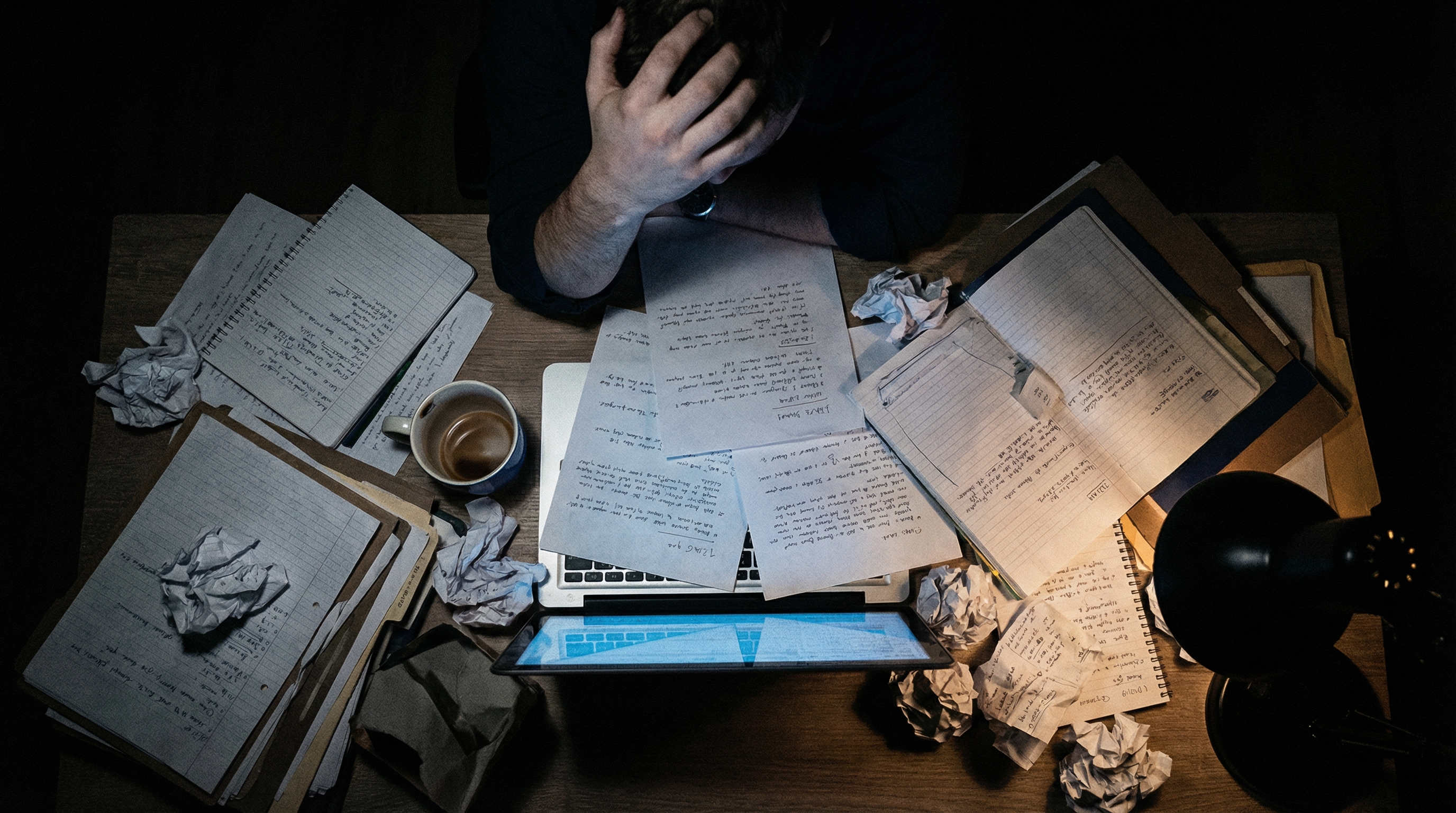
But here's the part nobody talks about. I wasn't physically exhausted from typing on a keyboard for 14 hours. My fingers were fine. My back was fine. The bone-deep, can't-think-straight, everything-is-heavy exhaustion I felt was entirely manufactured by my own brain. My emotions had been screaming at me for weeks — fear of failure, resentment toward the client, anxiety about money I couldn't afford to lose. Instead of listening, I kept "grinding." My brain responded the only way it knew how: it made me stupid.
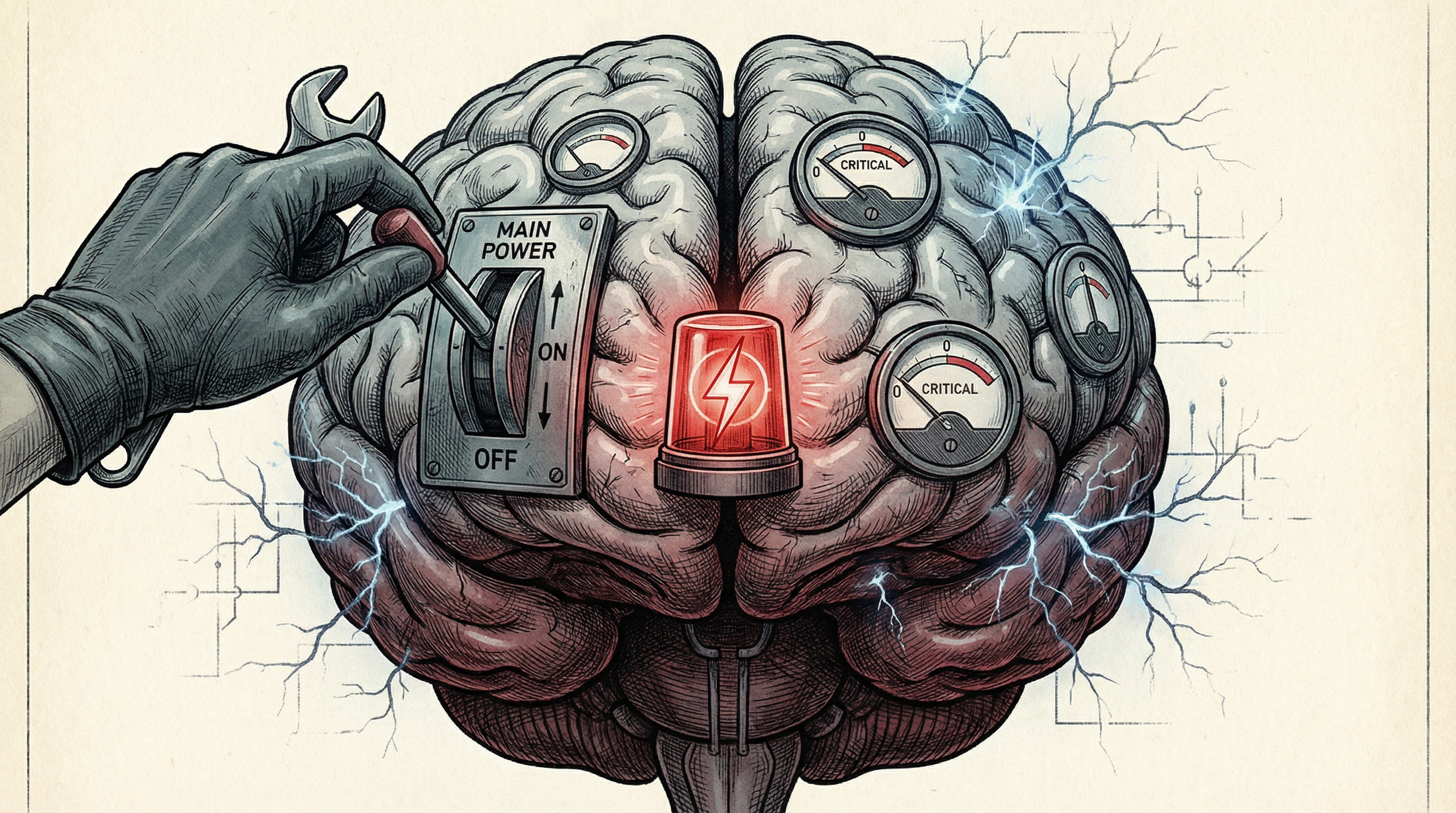
Your brain has a system most people don't know exists. It's called an adaptive energy conservation mechanism. It works like this: when your brain calculates that the effort required for a task dramatically exceeds the expected reward, it generates fatigue signals to stop you from wasting resources.
Read that again. Your brain creates tiredness on purpose.
This isn't damage. This isn't your muscles being depleted or some mythical "sleep debt" catching up. This is your brain running a ruthless cost-benefit analysis on every single thing you do — and when the math doesn't work, when the work feels pointless, when the emotional cost is too high, it slams the brakes. It floods you with exhaustion. Makes your limbs heavy, your thoughts foggy, your motivation nonexistent. Not because you ran a marathon. Because your emotions told your brain this shit isn't worth the energy.
Think about the last time you felt truly, crushingly exhausted at work. I'll bet $1,000 it wasn't after anything physical. It was after your boss tore into you in front of 4 colleagues. After a client sent a passive-aggressive email at 4:47 PM on a Friday. After you realized a project you'd been building for 6 weeks was heading straight into a wall. The emotional hit landed first. The "exhaustion" followed like clockwork.
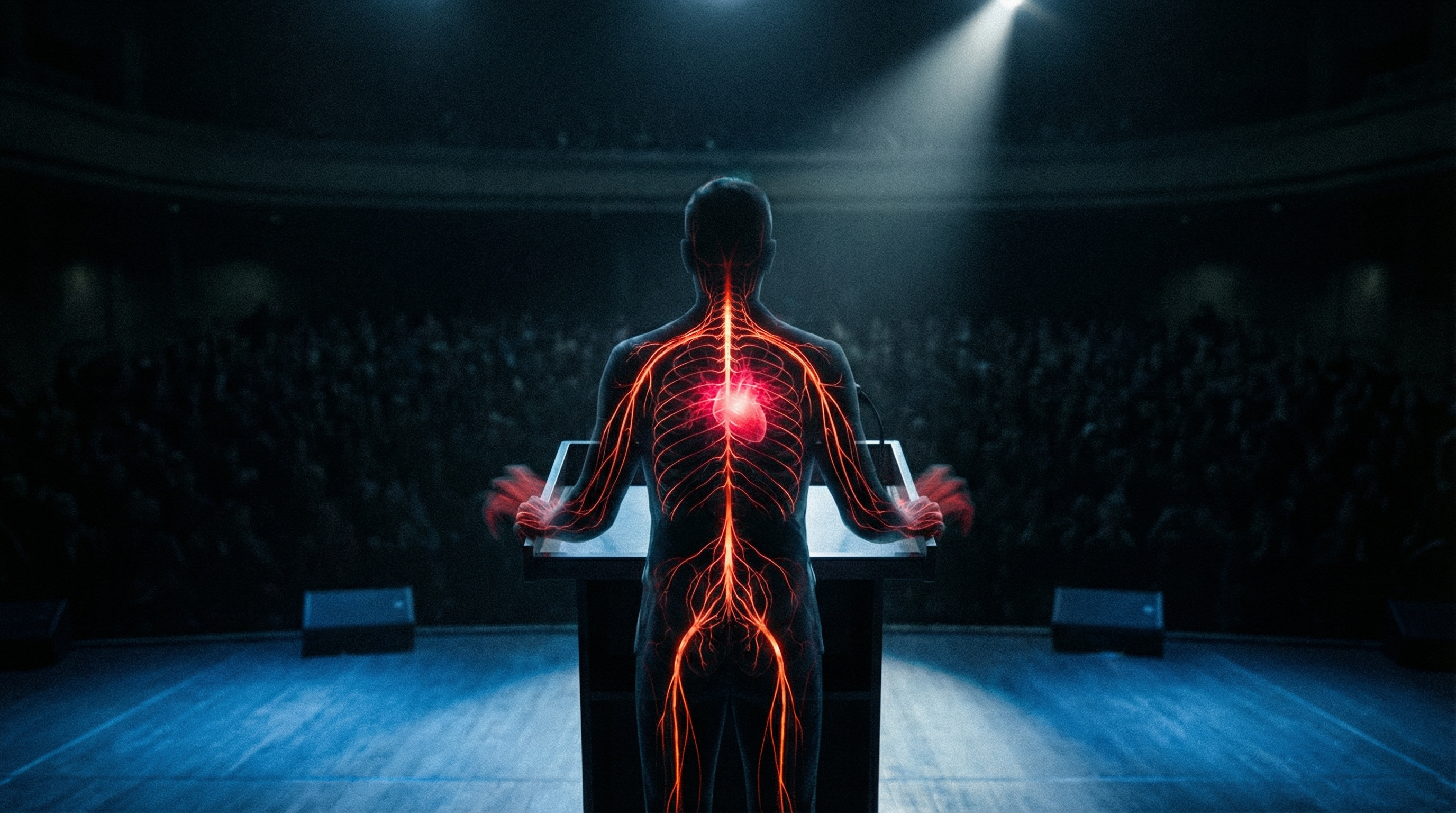
And if you still believe your mind and body operate as separate, independent systems, try this: imagine you have to give a speech to 10,000 people in 10 minutes. Right now. Feel that? Your heart rate just shifted. Your palms might be damp. Your stomach tightened. Nothing happened to your body. A thought happened in your brain, and your body reacted like you were being hunted by something with teeth.
Researchers proved this connection with an experiment that should keep you up at night. They showed a test subject a red-hot iron, then blindfolded them. Then they pressed a cold spoon against the subject's skin. The body produced actual burn symptoms — blistering, inflammation — from a cold piece of metal. The brain was so convinced the iron was real that it commanded the body to burn itself. That's how tightly your emotions control your physical state. Your "exhaustion" operates on the exact same wiring.
So every time you mumble "I'm so tired" after 8 hours of sitting at a desk, answering emails, and attending meetings that could've been a 3-sentence Slack message — you're not describing physical fatigue. You're describing emotional bankruptcy. Your feelings drained you dry, and you didn't even notice.
There are 5 shifts that dismantle this cycle. None of them involve buying a $47 supplement stack or downloading another meditation app that you'll use for 3 days and forget.
Stop using "tired" as a catch-all diagnosis. Next time exhaustion hits you, ask one question: is this my body or my emotions? If you didn't run, lift, haul, or physically destroy yourself in the last 4 hours, the answer is almost certainly your emotions. That single distinction changes your recovery strategy from "collapse on the couch and watch Netflix until my eyes bleed" to "deal with what's actually draining me." Two completely different protocols. One of them works. You've been choosing the wrong one.
Start an emotion log. Not a journal. Not a gratitude list. A log. Every time you feel resistance, dread, or exhaustion around a specific task, write down the task and the feeling. Do this for 14 days. Patterns will emerge that make you deeply uncomfortable. You'll discover that 80% of your "tiredness" clusters around 3 or 4 specific activities — and the reason you dread those activities isn't their difficulty. It's a past failure that scarred you. A fear of being judged by someone whose opinion you pretend not to care about. A buried belief that the work is completely pointless. Once you see the pattern, you can disarm it. Build a response playbook for the situations that trigger your emotional drain. The exhaustion fades when the anxiety underneath it does.

Break every task until it's embarrassingly small. Your brain generates fatigue when it stares at a massive project and calculates that the effort-to-reward ratio is garbage. So stop showing your brain massive projects. Show it the first 12-minute piece. A 6-month deliverable is paralyzing. "Write the table of contents" takes 8 minutes and gives your brain a completion signal that triggers actual dopamine. Use checklists — yes, the tool you think is beneath you, the same tool every surgeon and airline pilot on Earth depends on to not kill people. Check a box. Feel the micro-hit of progress. Move to the next box. This isn't childish. This is neuroscience exploited in your favor.
Find the meaning or admit there isn't one. Your brain's conservation system is ruthlessly logical. If it determines a task is meaningless — that success is unlikely and the work serves no one — it will fight you with exhaustion until you surrender. You cannot willpower your way through this. The only override is genuine belief that the work matters. And if you can't find that belief after honest examination, you don't have a fatigue problem. You have a life problem. You're spending 2,000 hours a year on shit you don't care about, and your brain is the only honest organ left in your body, screaming at you to stop.
Schedule your collapses before they schedule themselves. Human concentration peaks between 25 and 30 minutes and maxes out around 90. After that, your brain's performance drops off a cliff and the fatigue signals spike hard. Work 25 minutes, then stop for 5. Not "stop and scroll Instagram" — that floods your brain with cheap dopamine and makes the less stimulating work that follows feel absolutely unbearable. Actual rest. Stretch. Walk around the block. Stare out a window like you've completely lost your mind. The break needs to be boring. Boring is the entire damn point. The moment you fill your rest period with a screen, you've turned recovery into another source of drain.
Here's what happens next. Not tomorrow. Not "when things settle down." Not after you finish reading 4 more articles about productivity. Right now.
The next time the word "tired" forms in your mouth, stop. Ask yourself: tired from what? Be honest for maybe the first time in years. Stop treating exhaustion like weather — something that just happens to you, beyond your control — and start treating it like a diagnostic signal from your own brain that something emotional is rotting underneath your daily routine.
Buy a $2 notebook. Write the date, the task, and the feeling. Do it for 14 days. I don't care if it feels juvenile. I don't care if you think you already know what's eating you. You don't. If you did, you wouldn't be "exhausted" every single day.
You've been chugging energy drinks and collapsing on couches and calling it "recovery" while the actual problem — the emotional wreckage rotting underneath every task you avoid — gets worse. A $3 can of caffeine and taurine is a bandaid on a wound you refuse to examine.
Stop performing exhaustion. Start diagnosing it. Or spend the next 40 years telling everyone how tired you are while your brain quietly sabotages every single opportunity that requires real effort.