10 Seconds of Doing Nothing Outperforms Your Entire 12-Hour Workday
Your brain replays learning at 10x speed during micro-breaks — and your phone destroys it every single time.
You worked 11 hours yesterday and accomplished less than a Stanford neuroscientist does in 90 minutes. That's not an insult. That's a measurement. And the gap between your output and theirs has absolutely nothing to do with intelligence, talent, or how many productivity apps you've downloaded this month.
Here's what's actually happening: you're running a $200,000 machine at 6% capacity. The human brain — your brain, right now, reading these words — can process information, solve problems, and generate output at a level that would embarrass most artificial intelligence systems. But you've never once operated it at full power. Not because you can't. Because nobody taught you where the damn ignition switch is, and you've been pushing the car uphill with the parking brake on for your entire adult life.

Right now, 91% of working professionals describe themselves as "unable to focus for more than 20 minutes." We have access to more knowledge than any civilization in human history, and we can't sit still long enough to absorb a single chapter. The average person checks their phone 96 times per day — once every 10 minutes during waking hours. Each check costs roughly 23 minutes of refocusing time, according to researchers at the University of California, Irvine. You're not working 8 hours. You're working 45 fragmented minutes smeared across 8 hours of digital interruption. And then you have the audacity to call yourself "busy."
Your coworker who seems supernaturally productive isn't smarter than you. The cognitive gap between high performers and average performers is roughly 2 to 3x — not 20x, not 100x. Same hardware, radically different output. The difference isn't processing power. It's that they know how to flip their brain into a state where every neuron fires at the problem in front of them, while your neurons are fractured between a spreadsheet, a notification from your ex, and the nagging awareness that you haven't exercised in 19 days.
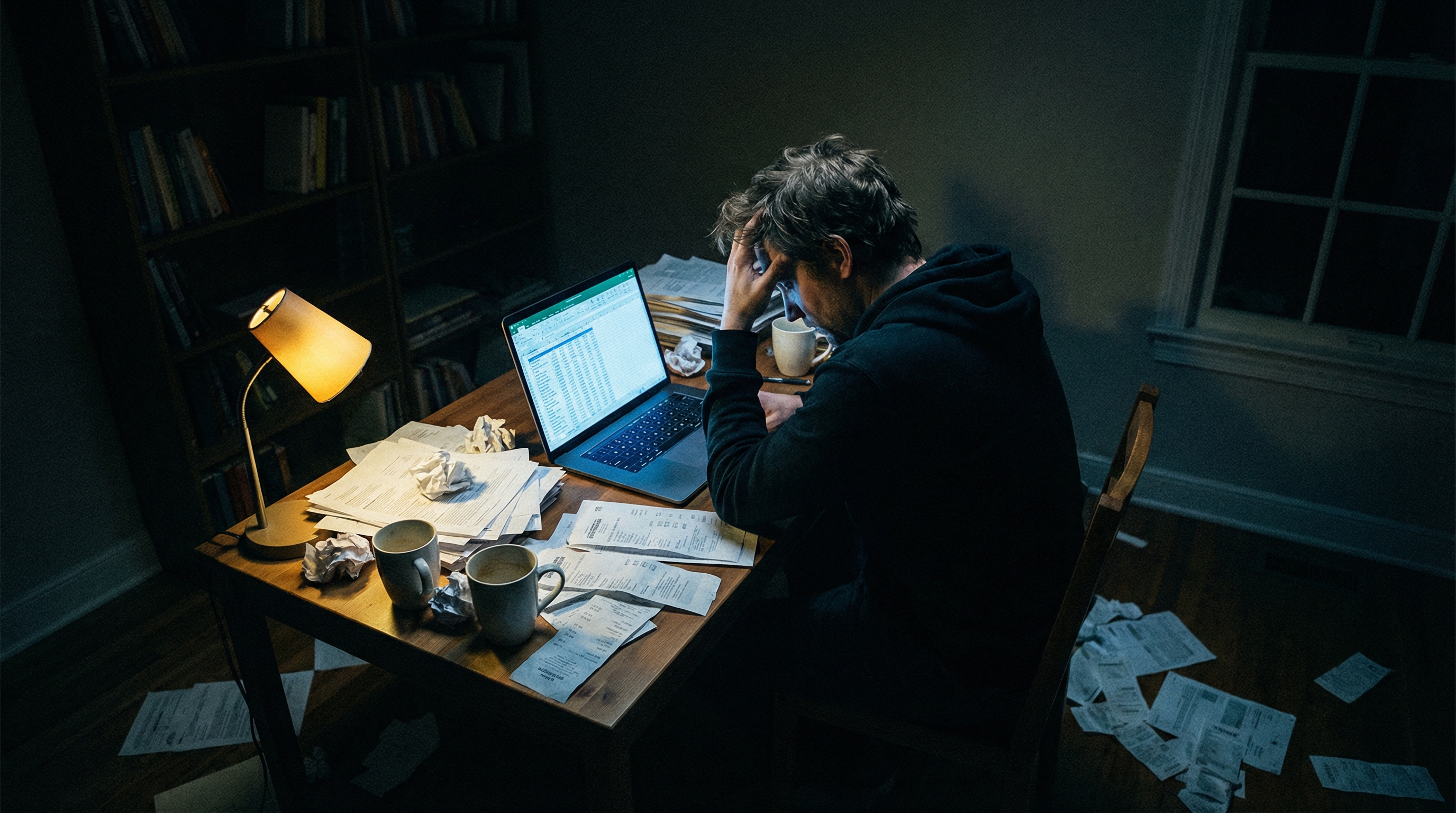
I lost a $47,000 client because of a presentation I finished at 2:37 AM. Not because the work was late. Because the work was shit. I'd spent 3 months grinding on the project — 12-hour days, weekends obliterated, sleep compressed into 4-hour windows of anxious unconsciousness. I thought I was being heroic. I thought the sheer volume of hours proved my commitment. The client reviewed the final deliverable for exactly 6 minutes, told me it "lacked coherence," and terminated the contract 72 hours later. Six minutes. Three months of my life evaluated and dismissed before their coffee got cold. When I went back and reviewed those files — really reviewed them — I wanted to throw my laptop into oncoming traffic. The logic was scattered. The structure made no sense. Entire sections contradicted other sections 4 pages later. I didn't have a skill problem. I had a brain that had been running on fumes for 90 straight days, producing work that felt productive in the moment and looked like a dumpster fire in daylight.
That's when I stumbled into something that rewired every single thing about how I work. Not a new app. Not a morning routine from some billionaire's ghost-written autobiography. A neuroscience principle so fundamental and so criminally underused that learning it for the first time made me furious at every teacher, boss, and mentor who never bothered to mention it.
Your brain has two modes. Not metaphorically — neurologically. There's the active processing mode, where you're reading, writing, solving, consuming. And there's the consolidation mode, where your brain takes everything you just processed and wires it into your permanent neural architecture. The discovery that should piss you off? Consolidation doesn't happen while you're working. It happens during the pauses between work. When you stop for 10 seconds — just 10 seconds of doing absolutely nothing — your brain replays the material you just engaged with at 10 times the original speed. Ten times. Your brain is speed-running its own training data during those micro-moments of silence. And every single time you fill that silence with your phone, with music, with scrolling — you assassinate the process before it finishes.

This comes from one of the most cited neuroscience labs on the planet — Stanford University's research into human performance and focus. The mechanism works through a neurotransmitter called acetylcholine, which functions as a chemical spotlight for your neural circuits. When you focus your visual attention on a single point — literally staring at one spot for 30 to 60 seconds — acetylcholine floods your prefrontal cortex, and your brain physically shifts into a concentrated processing state. Your pupils narrow. Your peripheral awareness drops. The machinery of deep focus fires up like an engine that's been sitting cold for months. This isn't meditation-retreat nonsense. The United States Navy SEALs train an equivalent technique called box breathing — 4 seconds inhale, 4 seconds hold, 4 seconds exhale, 4 seconds hold — because even the most elite soldiers on Earth require a neural reset protocol before entering high-stakes environments. Your work is your high-stakes environment. Start treating it like one.

Here's the protocol that rebuilt my working life from the wreckage of that $47,000 disaster. Before any work session, I do 25 aggressive deep breaths — not yoga breathing, not guided meditation, just 25 hard inhales and controlled exhales. This drops my heart rate, shifts my nervous system from sympathetic arousal to parasympathetic readiness, and suppresses the cortisol that's been silently sabotaging my attention since my alarm went off. Then I fix my eyes on a single point — a screw on the wall, a mark on the desk, a dot on the ceiling — for 30 seconds. No thinking. No planning. Just a visual anchor that triggers the acetylcholine cascade. Two minutes of preparation. That's all it takes to shift from scattered to locked in.
During the work session — I use 50-minute blocks — the critical move is deliberate micro-pauses. Not scheduled breaks. Not standing up to stretch. The moments when your focus naturally dips — when you reach for water, when your eyes drift from the screen — you take 10 seconds. You breathe twice. You stare at nothing. You let your brain run its 10x replay cycle without feeding it new input. This feels catastrophically unproductive. Every instinct screams to check your email, glance at your phone, look something up. Ignore every last one of those instincts. Those instincts are the reason you've been operating at 6% capacity for years. Those 10 seconds of apparent nothingness are doing more for your learning and memory than the previous 5 minutes of active effort.
Then comes the part that will make every hustle-culture addict deeply uncomfortable: the break has to be a real goddamn break. When the 50 minutes end and your 10-minute rest period begins, you put the phone in another room. You sit on a couch, a chair, the floor — wherever. And you do nothing. No Instagram. No TikTok. No "just checking one message." The neuroscience is unambiguous: scrolling your phone during a work break costs the same cognitive resources as working. You're not resting. You're task-switching into a different category of mental labor, and your brain never receives the downtime it needs to consolidate and rebuild. The phenomenon is called NSDR — non-sleep deep rest — and 10 minutes of it is worth approximately 3 to 4 hours of actual sleep in terms of neural recovery. Google's CEO practices it. Top-tier athletes practice it. Anyone who's figured out that genuine silence is the most expensive productivity tool on the planet practices it.
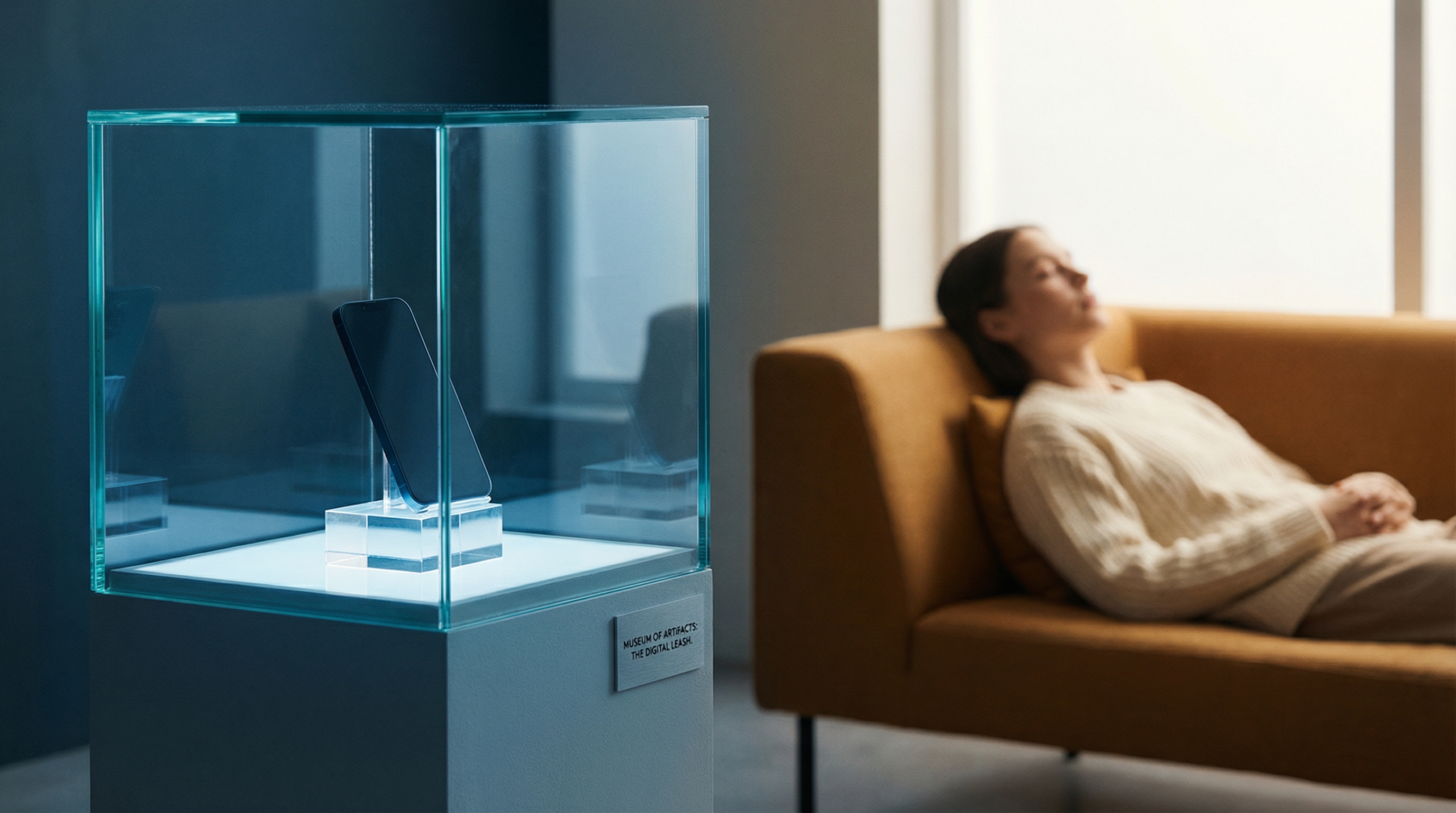
Here's what stunned me when I started: after 3 days of phone-free breaks, I began wanting to work during rest periods. Not dreading the next session — craving it. My brain, finally given actual recovery time, came back hungry. I'd sit on my couch staring at the ceiling, and within 4 minutes my mind would start generating ideas, solving problems I'd been stuck on, planning next steps with a clarity I hadn't felt since I was a kid building things for fun. That's not discipline. That's neurochemistry. That's a brain finally given the conditions it was designed to operate under — conditions that your phone has been systematically destroying since the day you got one.
When micro-pauses and structured silence aren't enough — when the afternoon slump hits and your focus is genuinely shot — physical movement is the only honest reset. Exercise triggers a dopamine release that sustains elevated cognitive performance for a full 3 hours afterward. Three hours of near-morning-level focus from a 15-minute walk. I hit the gym most afternoons, and the work I produce in the 2 hours after is indistinguishable in quality from my peak morning output. That doesn't happen by accident. It happens because blood flow, dopamine, and BDNF are doing exactly what millions of years of evolution designed them to do — when you stop being too busy to let them.
The final piece — and I already know you don't want to hear this — is sleep. If you're working past 10 PM, you're not dedicated. You're delusional. Everything you produce after your brain has been active for 14 straight hours is compromised at a molecular level. Neural consolidation — the process that converts today's learning into tomorrow's ability — happens primarily during deep sleep. Cut your sleep to 5 hours and you destroy roughly 40% of that consolidation. You're choosing to forget almost half of what you learned today because staying up until 1 AM felt more productive than lying down at 10. I have a hard rule: nothing after 10:30 PM. Not because I'm lazy. Because every piece of work I produced past midnight was objectively terrible, and I have the deleted files and the $47,000 hole in my bank account to prove it.

Everything I just described — the breathing, the micro-pauses, the phone-free breaks, the exercise reset, the sleep discipline — requires zero talent. Zero money. Zero special equipment. It demands that you do less, not more. And that's precisely why 97% of you will ignore it. Because doing nothing feels lazy. Because checking your phone feels productive. Because grinding until 2 AM feels heroic. Your broken, overstimulated, chronically exhausted brain has convinced you that more effort is the answer to a problem that only stillness can solve.
You're sitting on a $200,000 machine. You've been running it at 6% capacity your entire career because nobody showed you where the off switch was — and you were too busy scrolling to notice the engine overheating. Put the phone down. Breathe. Stare at a wall. And watch what happens when you finally stop working long enough to let your brain do its actual job. Or keep grinding. Keep checking. Keep telling yourself that 12 hours of fragmented bullshit equals results. And explain to me, five years from now, why you're still exactly where you are today.